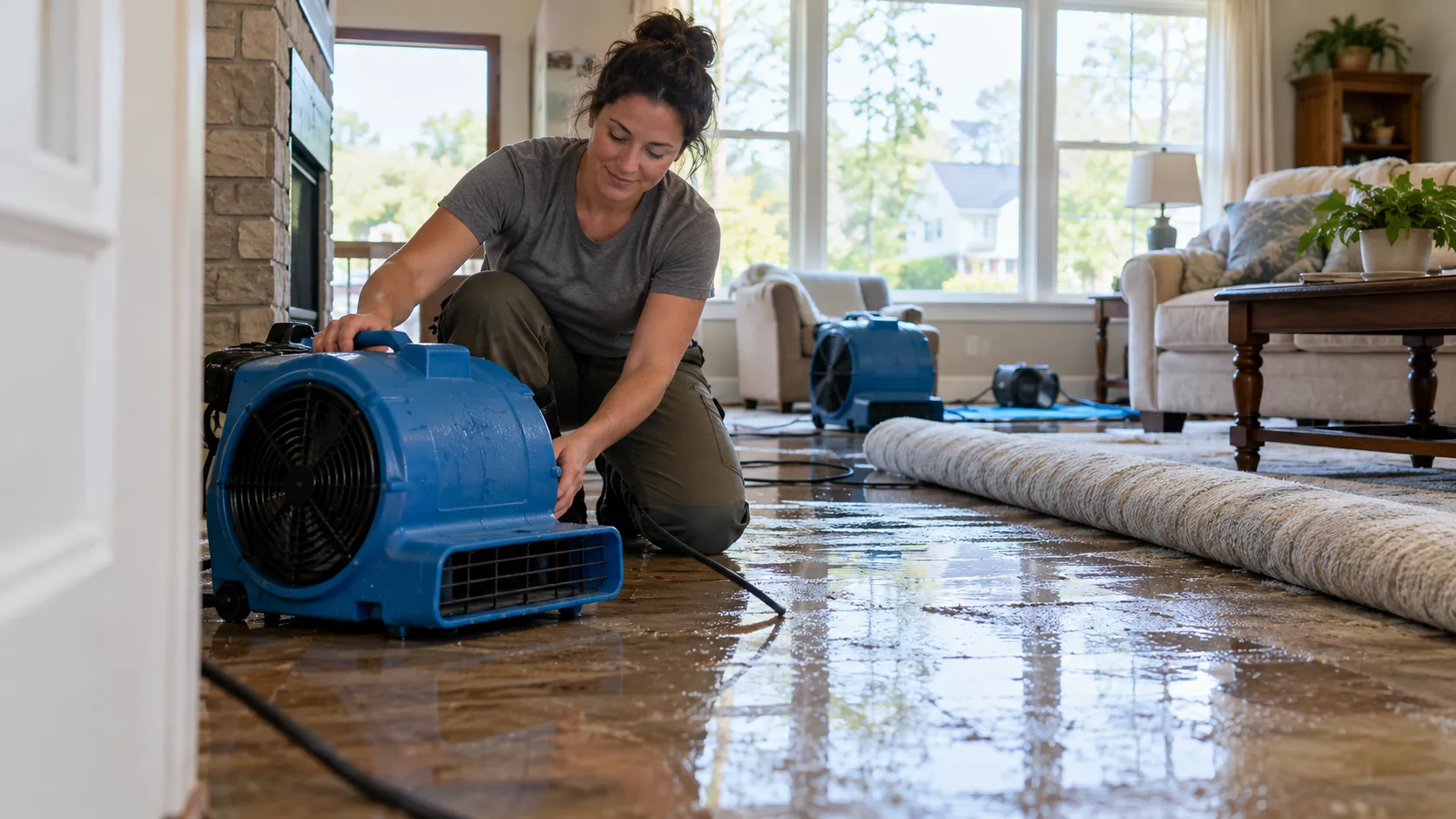
Water in the House? Start Here
Say you come home after an afternoon storm. The door sticks. There is a dark shine across the tile, and your socks are wet before you reach the kitchen. Your stomach drops. That is a normal reaction. What you do next matters more than how you feel right now.
Take one slow breath. Stay out of any room where water touches outlets, cords or appliances. If it is safe, close the main water valve. Lift small items off the floor. Then reach out to a provider.
Peoplesinvolvement Restoration is a referral service. We do not do the work ourselves. We connect homeowners in the Palm Beach County area with independent local providers who handle emergency water damage repair, water extraction and structural drying. Many providers can respond quickly, but availability depends on the provider. Request a callback to check availability.
Request an Estimate
Would you rather start with numbers? You can request an estimate and compare what a provider tells you.
Request an Estimate
How It Works
A simple link between you and the right provider
Peoplesinvolvement Restoration is a referral service for homeowners in the Palm Beach County area. You tell us what happened. We point you toward an independent local provider in our network who handles water damage. That is the whole job, and we say so up front.
How a call usually goes
Say a washing machine hose lets go while you are out running errands. You come back to a soaked laundry room and a damp hallway. You call. You describe the room, how long the water may have run and whether the power is on nearby. You are connected with a provider. The provider talks you through what to do before anyone arrives, then sets up a visit.
Providers keep their own schedules, so call hours and arrival times vary. Many can respond quickly. Ask what is realistic for your address and your kind of loss.
What the provider does
The provider, not Peoplesinvolvement Restoration, does the physical work. That can include pulling out standing water, running drying equipment, removing soaked materials, checking moisture levels and helping document the loss for a claim. Each provider sets its own prices and terms, and you agree to them directly with that provider.
What Peoplesinvolvement Restoration does not do
We do not show up with equipment, set prices or promise outcomes. We also do not replace your own judgment. If the situation feels unsafe, such as water near live power, a sagging ceiling or a strong gas smell, leave the area and contact local emergency services first. Once everyone is safe, Request a callback to talk with a provider about the water.
Water Problems Across the Palm Beach County area
Homes in the Palm Beach County area face water in ways that drier climates do not. Summer storms roll in almost every afternoon. Hurricane season runs from June to November. The air stays humid most of the year, so a damp wall can turn musty fast.
Many homes here are concrete block on a slab. When a pipe bursts or wind-driven rain gets in, water spreads across the floor, soaks into baseboards and creeps up the bottom of the drywall. Tile roofs and shingle roofs can both let rain in after a hard blow. Condos add another twist. Your leak may start in the unit above, and your neighbors may be dealing with it too.
True basements are rare here, but some homes have lower levels, sunken rooms, garages or crawl spaces that flood. Providers in our network can help with those spaces as well.
If water is in your West Palm Beach home right now, the next step is simple.
Request an Estimate
Not an emergency yet, like a slow stain spreading on a ceiling? Request an estimate and get the conversation started.
Request an Estimate
Calm Steps and Smart Questions
The first hour, one step at a time
Say a pipe lets go under the sink at dinnertime. Stop and look before you move. Check how close the water is to outlets and cords. If it is near power, stay out. Close the main water valve. If you can reach the breaker panel with dry hands and a dry floor, switch off power to the wet area. Then call.
Photos before the mop
Take quick photos and short videos of the water, the damage and the items affected. Providers can often help document damage for a claim, but your own record helps too. Then move rugs, books and electronics up and out.
Questions worth asking a provider
Ask how they will find where the moisture is hiding. Ask what equipment they use, what they will remove and why, and how they will explain the quote. Ask whether they carry the licensing and insurance that your state requires for this work.
What a good answer sounds like
A solid provider answers plainly. They explain the steps in order, give a written quote and admit what they cannot know until they see the damage. You may hear "it depends," followed by exactly what it depends on. That is a good sign.
Red flags to walk away from
- Pressure to sign before they have seen the damage
- No written quote
- Vague answers about equipment or steps
- A request for full payment up front
- Tearing out everything without checking moisture first
What it may cost
In the U.S., small drying jobs often run from several hundred to a few thousand dollars. Larger floods, dirty water or big material removal can cost more. Prices vary by job, so get a written quote before work starts.
Insurance and mold
Some policies may cover sudden damage, such as a burst pipe, but check your policy. Flood from rising water is often handled differently. In humid weather, mold can begin in a day or two, so drying quickly matters.
Before the next storm
Learn where your main water valve is. Keep a folder with your policy and a few photos of each room. Check roof and window seals before hurricane season starts.
Start With a Call
Wet floors are stressful. A short call can steady things. Request a callback to reach a provider in our network and ask what they can do for your address. Call hours vary by provider, so if one line is busy, try again or request an estimate. There is no obligation to book.
Request an Estimate